
E takatū ai te kaunihera, te rohe
Shaping our council, our region
The decade ahead will be one of profound transformation. Geopolitical uncertainty, shifts in global systems, new technologies, climate impacts, resource pressures, the cost of living burden and social fragmentation are creating a complex set of challenges. To respond, we need to address today’s economic pressures while also planning for a more resilient, prosperous and equitable future for the Waikato region.
We need a strong economy underpinned by a healthy environment.
This strategy sets a clear direction for the next decade with a focus on delivery for the period 2026-2029.
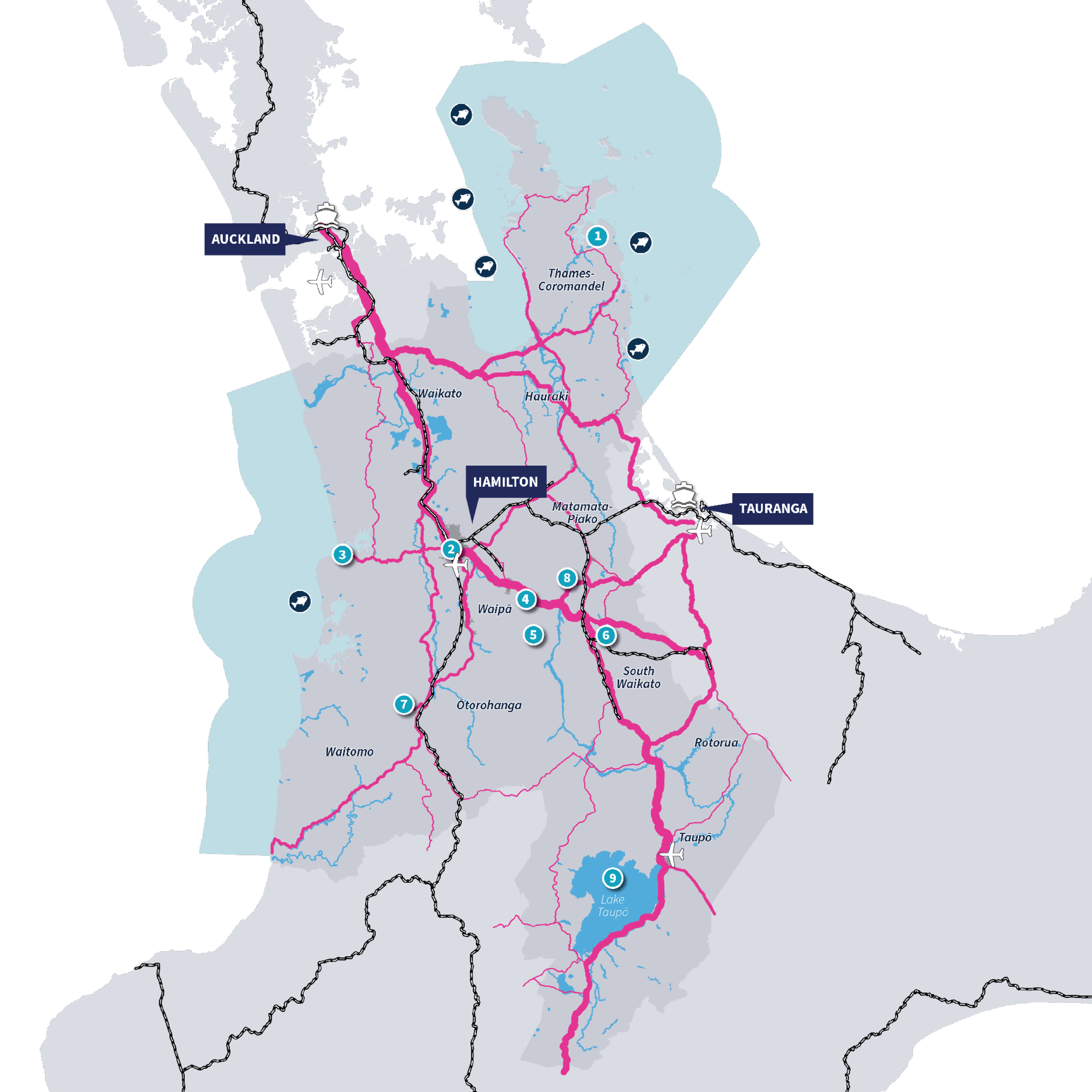
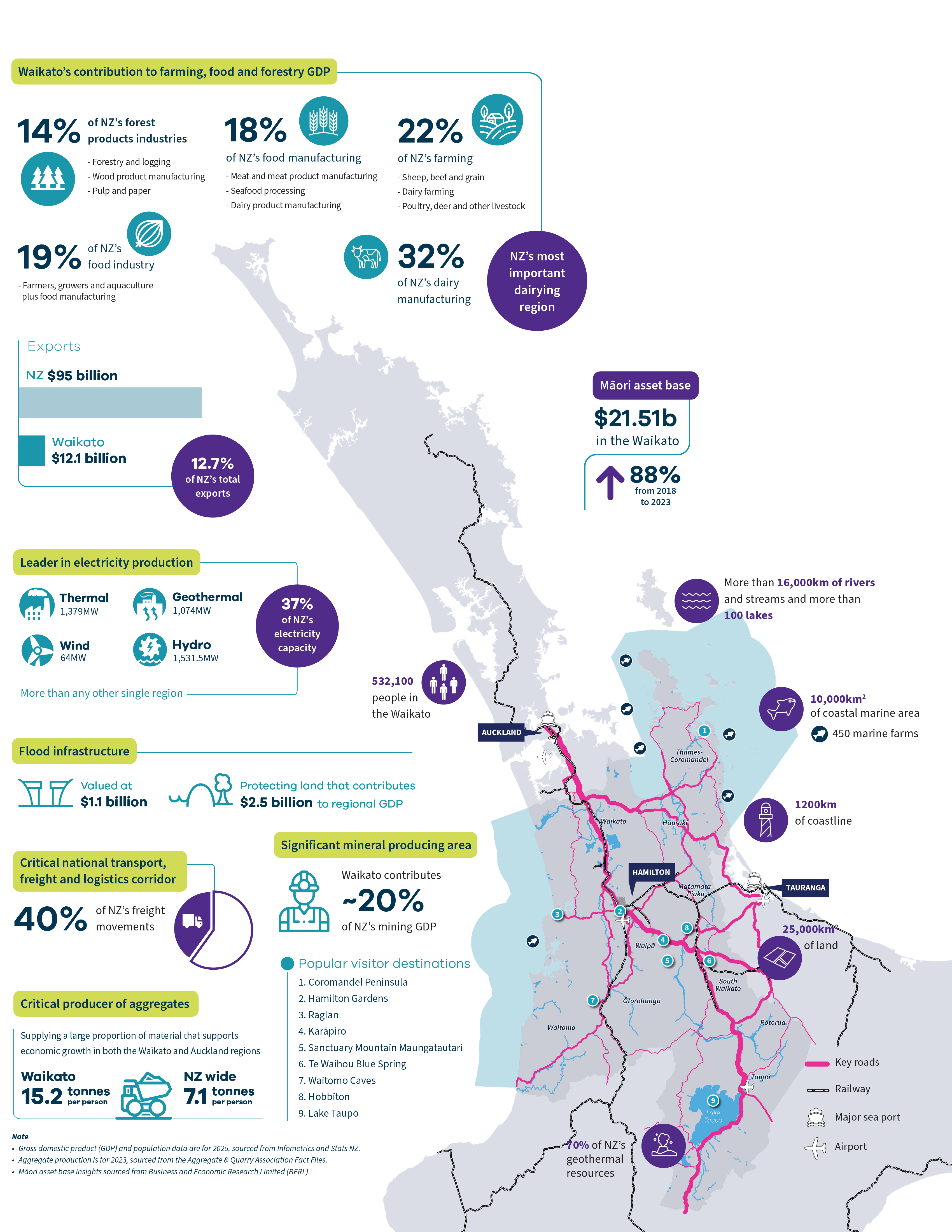
A diverse economy spanning agriculture, advanced manufacturing, technology, renewable energy, aquaculture, tourism, healthcare and forestry.
The region’s strengths are further supported by a growing Māori economy and the longstanding cultural regional leadership of the Kīngitanga.
Matawhānui | Vision
Waikato: Empowered people shaping a healthy, prosperous place for generations to come.
Te whakarite mō āpōpō | Future-fit organisation
To be future-fit, we need to be in the best shape possible to ‘lift and shift’ essential regional services into whatever future local government structures best serve the needs of the Waikato’s diverse communities. We also need to ensure we are active participants in designing the future of local government.
Outcome
Our organisation, and the region, is change ready.


Ka tōnui, ka taurikura te rohe | Productivity and prosperity
With its strong foundation of export-focused primary industries, strategic position connecting Auckland, Hamilton and Tauranga, a growing Māori economy and strengths in education, technology and high-value manufacturing, this region is well-positioned for long-term success. A regional spatial plan and economic development strategy will be key to coordinating different policies and activities, helping spread economic growth more evenly and supporting the region’s productivity and overall prosperity.
Outcome
The Waikato is recognised as a leading region for integrated spatial planning where well-coordinated decisions ensure the responsible use, development and protection of our natural and built resources.
Outcome
An agreed direction for the regional economy to enable better decision making and efficient allocation of resources.
Kia manawaroa ake te rohe | Building regional resilience
Extreme weather and natural hazards such as floods pose growing risks to lives, livelihoods and critical infrastructure. Strengthening resilience is essential to reduce vulnerability and protect our communities and economy. While our flood infrastructure plays a critical role in protecting communities from risks, it must be accompanied by efforts to accommodate, avoid or minimise vulnerabilities.
Outcome
Communities are less vulnerable and exposed to natural hazards.

Outcome
Flood impacts are reduced within agreed service levels for communities, and our flood infrastructure and drainage network is enduring and affordable for ratepayers.

E toitū ai ngā rawa taiao | Sustaining natural resources
The Waikato’s natural resources underpin the health, identity and prosperity of our region, yet our native plants and animals and the ecosystems they live in are threatened. Protecting and restoring these natural assets is not only essential for a healthy environment; it’s an investment in the Waikato’s future.
Outcome
The Waikato’s environment, economy and communities are protected from the impacts of pests, weeds and diseases.

Outcome
Native plants and animals and the ecosystems they live in are thriving.
Outcome
Water quality is maintained and improved, riverbanks are stable and flood risks reduced.

Outcome
Sustainable and reliable access to quality fresh water.
Pūnaha waka tītike | Optimised transport system
Transport is the backbone of regional connectivity and economic growth. A reliable and efficient transport system is essential to connect people to jobs, education, people and services, move goods reliably and reduce emissions. By shaping a future-focused network, we can improve accessibility, enhance safety and support a thriving regional economy while protecting the environment.
Outcome
A transport network that supports economic development by efficiently moving freight and people, enhances social wellbeing and ensures equitable access to essential services.

Outcome
An environmentally sustainable, energy efficient and increasingly low carbon transport system that reduces overall environmental impacts.
Outcome
A range of public and community transport options available that meet diverse access and mobility needs, reducing transport inequities and enabling transport-disadvantaged people and communities to travel safely, independently and reliably.
Outcome
Recognising progress made over previous decades, advocate for and deliver a safe, accessible transport system where no-one is killed or seriously injured.