
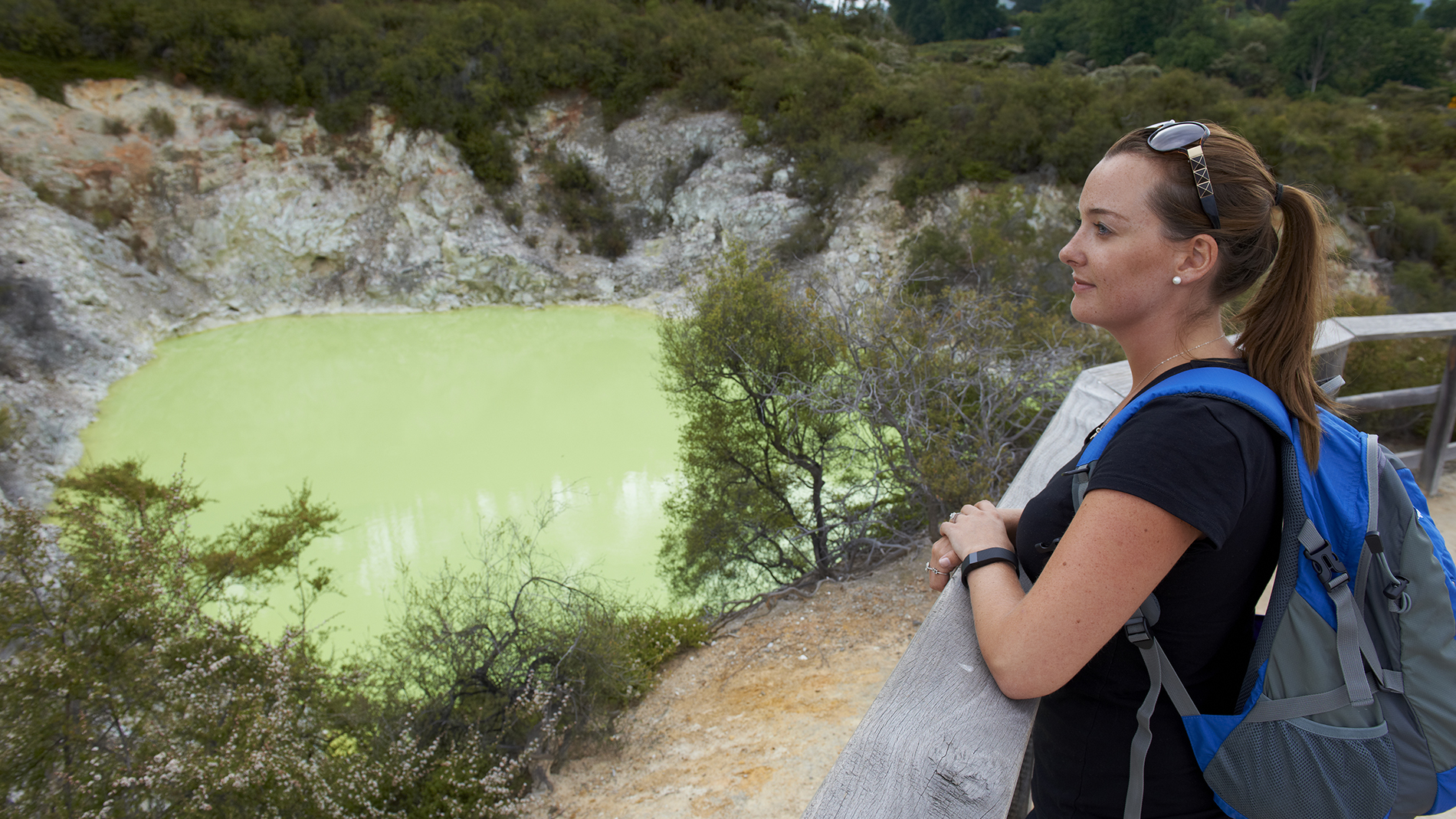
New Zealand is known world-wide for its geothermal attractions. Our geothermal features are major tourist attractions for both domestic and international visitors. The only other area equally well known is the Yellowstone National Park in the United States.
The Waikato region is home to internationally important geothermal sites visited by both domestic and international tourists.
The effects of tourism on our geothermal resources
Geothermal tourism provides local employment, brings tourism dollars into the region, and aids New Zealand's foreign exchange balance. It is worth approximately $206 million to the regional economy. Geothermal tourism also promotes public awareness and support for preserving natural areas.
Generally, tourism has little negative effect on the geothermal resource. However tourism can affect some geothermal features:
- Pumice and gravel used on tourist tracks has spread across and changed fragile sinter surfaces.
- Pathways cut across sinter terraces, stopping regeneration.
- At Tokaanu, many of the geothermal pools are partially drained to stop them flowing across the tourist path.
- In the past, the ground surrounding the Champagne Pool at Wai-O-Tapu was being eroded by foot traffic, leading to a risk that the pool surrounds may collapse. This has been remediated by putting a boardwalk across the area to prevent further erosion.
A sustainable industry
For tourism to be sustainable long-term we need to preserve and protect our geothermal attractions.
Through regional policy, consents and education we ensure this by:
- Making sure that the supply of geothermal fluid to surface features and to small-scale users isn’t affected when geothermal fluid is extracted from underground sources.
- Making sure that the materials used to build roads and tracks do not contaminate geothermal features; that the flow of geothermal water across sinter terraces is not diverted; and that foot traffic will not erode the land surrounding the features. The best way to do this is to use boardwalks above ground level, rather than paths.
- Preventing people from getting too close to geothermal features so that the features are protected from vandalism and accidental damage.