
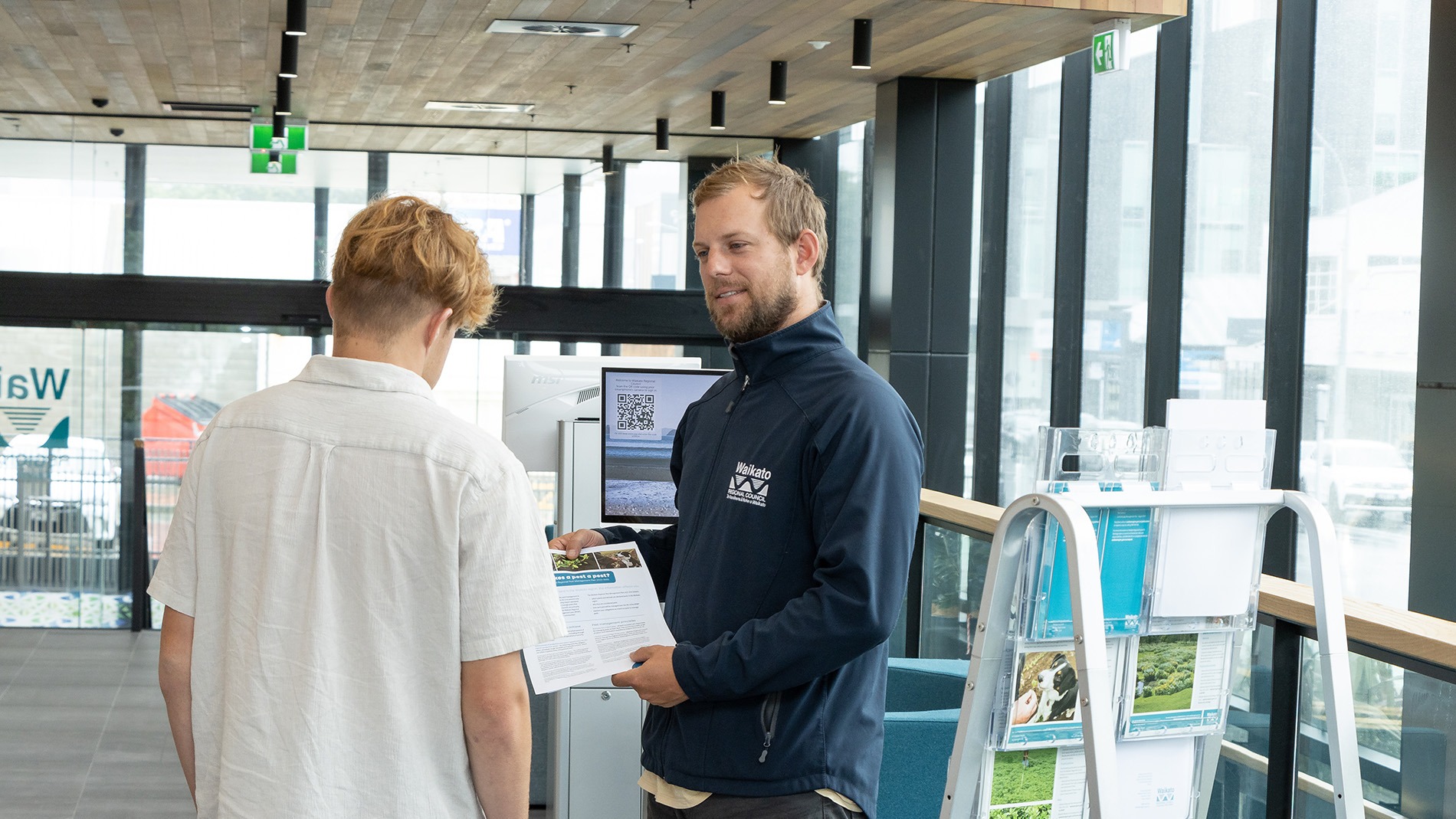
Waikato Regional Council manages natural resources and services that work best at a regional scale. This includes land, water, air and biodiversity, regional transport planning, flood protection, biosecurity and emergency management.
District and city councils focus on local services, facilities and land‑use planning within their communities. We work alongside each other to support a healthy environment and a resilient Waikato.
Regional, district and city councils: What’s the difference?
Regional councils are responsible for functions that are best delivered at a regional scale, including:
- managing natural resources such as water, soil, air, geothermal areas and coasts
- planning regional transport and providing passenger transport services
- protecting and restoring indigenous biodiversity
- controlling harmful plant and animal pests
- providing flood protection and drainage schemes
- keeping water users safe
- responding to pollution incidents
- helping communities prepare for civil defence emergencies and coordinating responses when disasters occur
District and city councils (also called territorial authorities) cover smaller geographic areas and are responsible for:
- essential local services, such as roads, water supply, wastewater, rubbish collection, parking and public toilets
- community facilities, including libraries, parks, sports fields, pools and playgrounds
- developing and monitoring district plans for land use and subdivisions
- community health and safety, including animal control, building control and liquor licensing
Biodiversity
We help maintain indigenous biodiversity across the region. This includes supporting landowners to care for high‑priority biodiversity sites such as wetlands, shallow lakes, coastal areas and kahikatea remnants. We also monitor long‑term changes in native ecosystems to inform policy, planning and resource management decisions.
Biosecurity
We lead regional biosecurity work to prevent, reduce or eliminate the impacts of invasive pests and diseases that threaten our environment, economy and native species. This work aligns with the national biosecurity system and is carried out alongside landowners, community groups, stakeholders, iwi and other agencies wherever possible.
Catchment management
We work with landowners in priority catchments to reduce erosion, improve water quality and protect landscapes. This includes incentives for fencing native bush, riparian planting, wetland restoration and retiring erosion‑prone land, while building long‑term awareness of sustainable land and water use.
Flood protection
We plan, fund, build and maintain flood protection schemes to help protect communities and essential infrastructure. Our flood protection assets include stopbanks, floodgates, pump stations, spillways and channels, all designed with local conditions and risks in mind.
Maritime services
We look after nearly 1,200 kilometres of coastline and hundreds of kilometres of lakes and rivers to support safe navigation across the region’s harbours and waterways. This includes maintaining navigation aids, managing moorings, removing hazards, investigating incidents and complaints, and delivering boating safety education and enforcement.
Policy and planning
We develop regional policies and plans to manage natural and physical resources, guided by the Regional Policy Statement. Our regional plans address specific environmental issues, and we work with district and city councils through district plan submissions to support alignment across the region.
Regional resilience
We help communities prepare for and respond to natural hazards such as floods, landslips, geothermal activity, coastal hazards, volcanic events, marine oil spills and pandemics. Our work includes providing hazard information to support informed decision‑making, training staff to national response standards and maintaining readiness through regular exercises.
Regional transport and planning
We plan and fund transport initiatives across the region, including affordable public transport that connects people to jobs, education, healthcare and community activities. This work supports transport equity, rural access and urban growth, and is delivered in partnership with NZ Transport Agency Waka Kotahi.
Resource use
We regulate the use of natural resources including water, soil, air, geothermal areas and the coastal marine environment. Alongside regulation, we support farmers and growers to meet their obligations, respond to pollution incidents 24/7 and take enforcement action when needed to manage environmental effects sustainably.
Science and monitoring
We monitor the state of the environment and produce science and data on water quality and quantity, soil health, biodiversity, geothermal activity, air quality, and coastal and marine ecosystems. This information supports policy development, flood warnings, resource management decisions and regional advocacy.