
People out and about in our region often come across water looking or smelling funny, both in freshwater waterways and on the coast. While sometimes these events actually are pollution, in other cases these events are part of the normal function of the ecosystem.
Below are some examples that might help people tell the difference.
Fresh water
Algal blooms
Algae are a natural part of rivers, streams, and lakes, but during hot, calm weather they can grow excessively, forming blooms. Most algae are harmless, but some species, known as cyanobacteria or blue-green algae, can produce toxins. These blooms often resemble paint spills on the water’s surface.
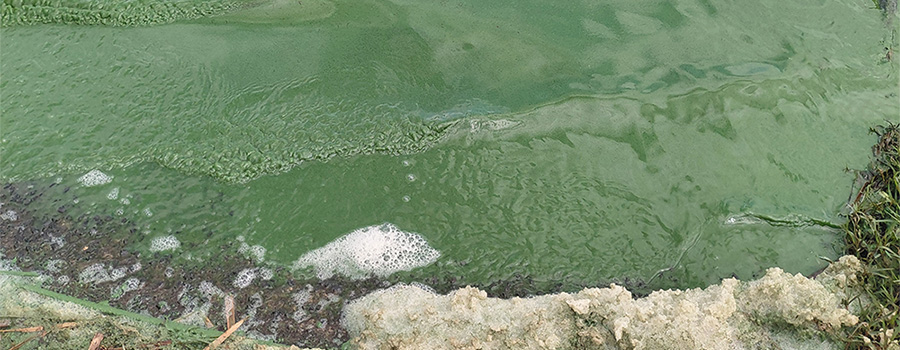
Other algae that are not toxic will look like a wet cloth or like silky hair. These are usually green algae.
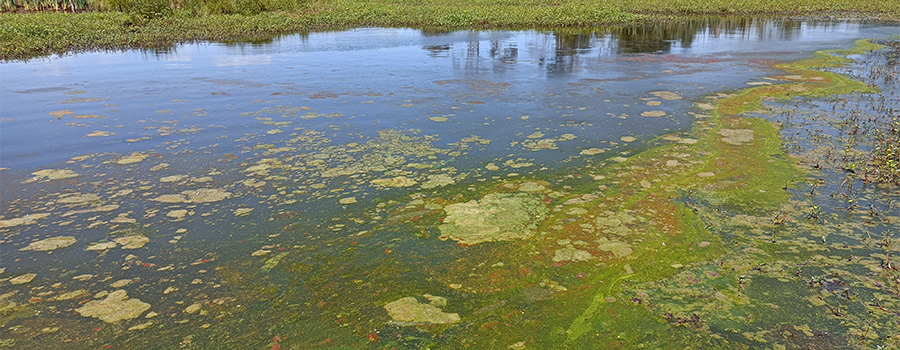
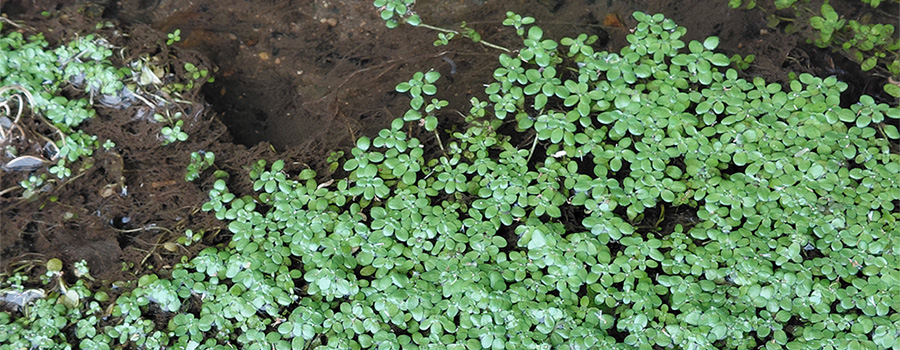
In the Waikato region, the plant duckweed is often mistaken for an algal bloom.
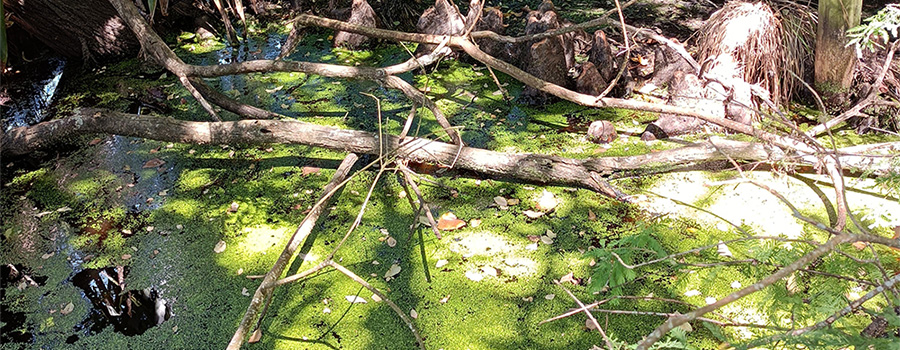
However, if you look closely, you can see the plant’s very small leaves, which algae doesn’t have.
Foam
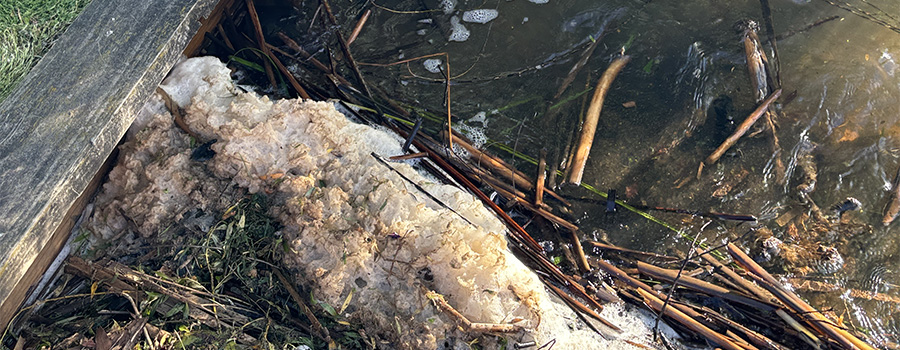
Freshwater foam or suds often appear after heavy rain and strong winds, collecting against logs, along stream banks, or on lake shores.
Natural foam usually starts white but becomes brownish or greenish as sediment and organic matter mix in. It has an earthy smell, sometimes fishy or grassy.
In contrast, foam from human activities tends to stay white, smells soapy or like detergent, and is usually found in small areas near the pollution source rather than during high water flow or windy conditions.
Iron-Oxidising Bacteria
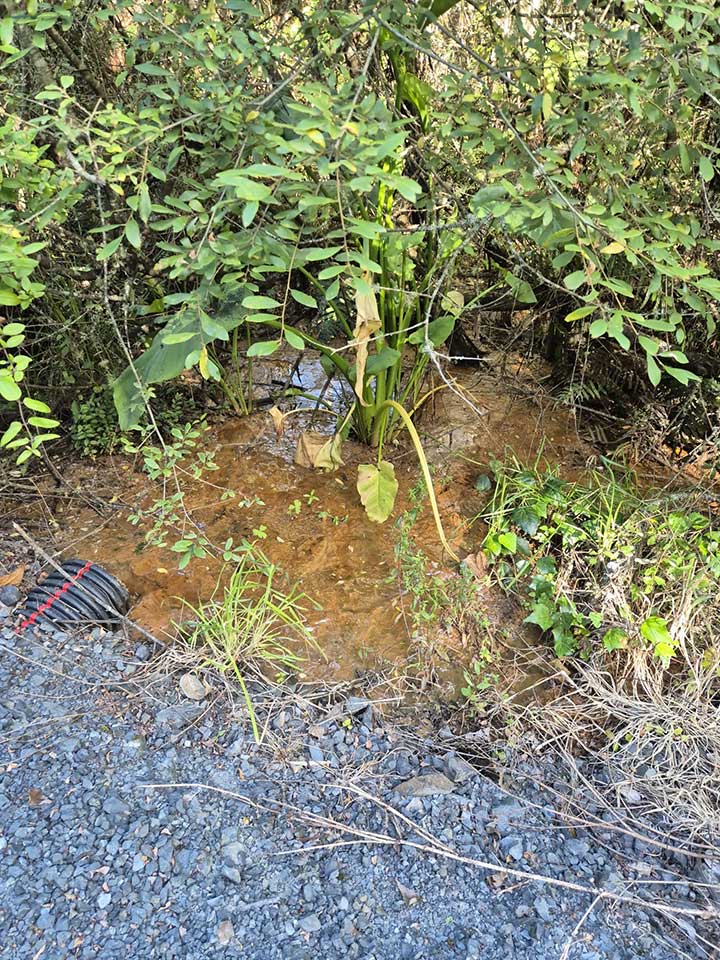
The breakdown of iron by bacteria in water creates iron oxide deposits, which appear as bright orange growths that look fuzzy or slimy.
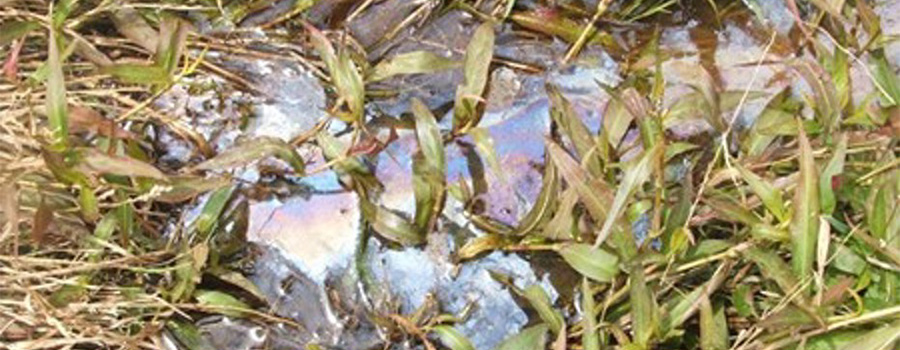
In our region, these deposits are common throughout the year. They are non-toxic and not linked to pollution. A rainbow or blue oily sheen often forms on the surface as well.
 Iron oxidisation
Natural sheen
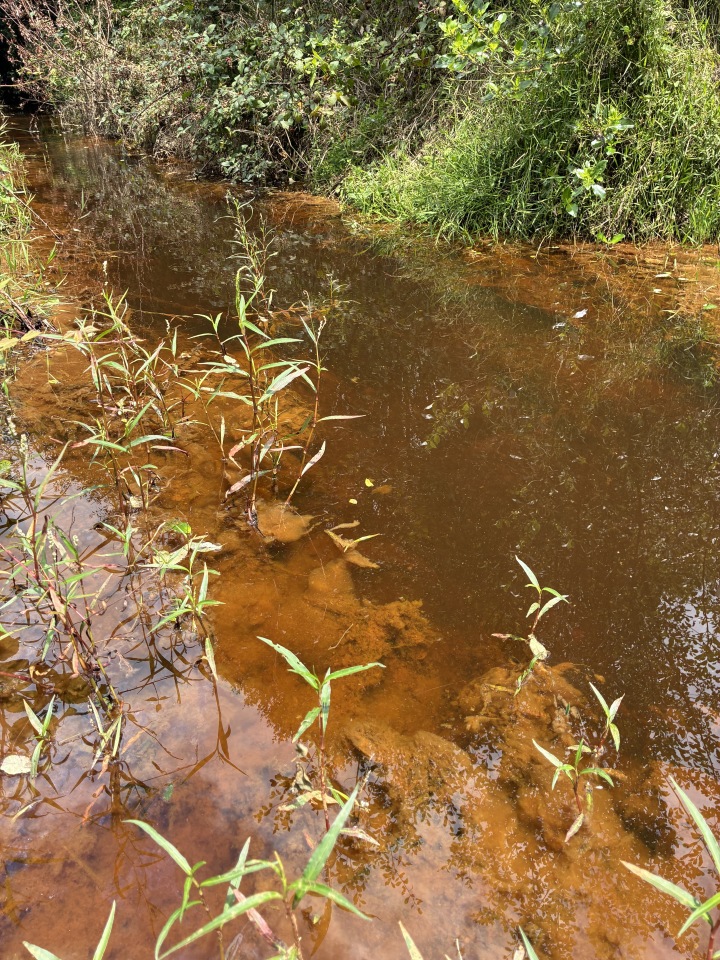
A sheen is a shiny or iridescent/rainbow appearance on the surface of the water. Rotting vegetation, stagnant waters and iron-oxidising bacteria can create natural sheens in the water.
Natural sheens can look like a petroleum spill. To tell them apart, you can try to break the sheen up with a stick. If it is natural, it will break up and separate into platelets, but if it caused by a spill, it will swirl and reform.
Remember, only approach the water if it is safe, banks can by muddy and slippery, particularly after periods of rain.
 Source: Northland Regional Council
Petroleum / hydrocarbon sheen
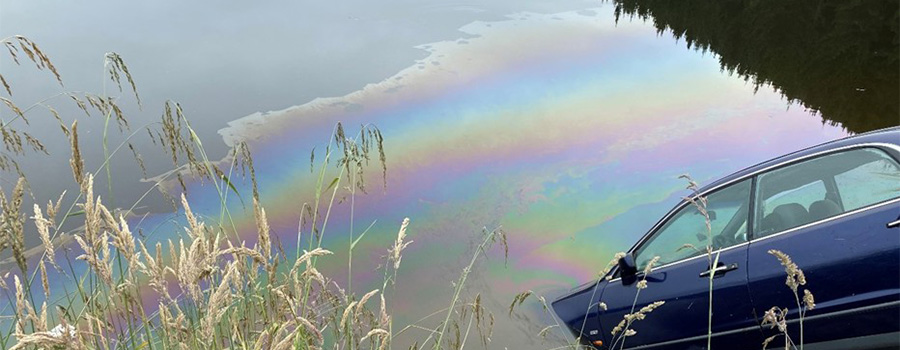
Petroleum products such as petrol, diesel and oil, can find their way into the water (eg through a car crash or a leaking fuel tank). This can also cause a sheen.
To differentiate between this sheen and a natural sheen, and only if it is safe to do so, you can try to break the sheen up with a stick. If it is caused by a petroleum product spill, it will swirl and reform. If it is natural, it will break up and separate.
Please contact WRC if you suspect the sheen has been caused by a petroleum substance.
 Source: Otago Regional Council
Pollen
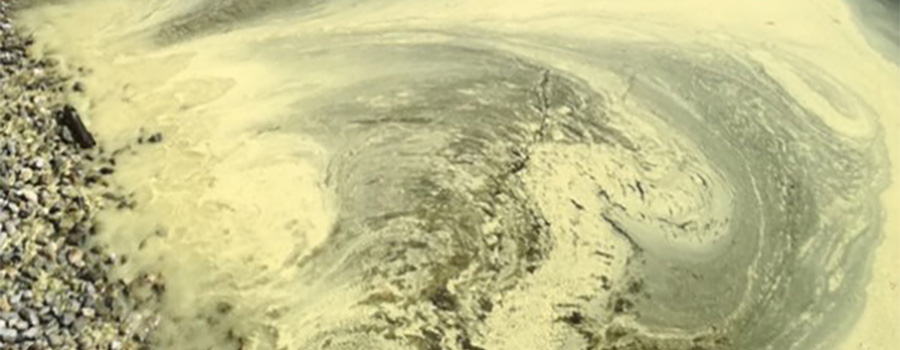
Pollen is most commonly seen in late winter and early spring when it falls from plants, with pine trees being a frequent source. It appears as yellow, powdery dust similar to sulphur but is easily recognised by its lack of smell.
When pollen collects on streams or lakes, it can be mistaken for paint spills, algal scums, or even toxic blooms. Because pollen can wash through stormwater systems, check nearby gutters or puddles for yellow dust as a clue.
 Source: Otago Regional Council
Stagnant streams
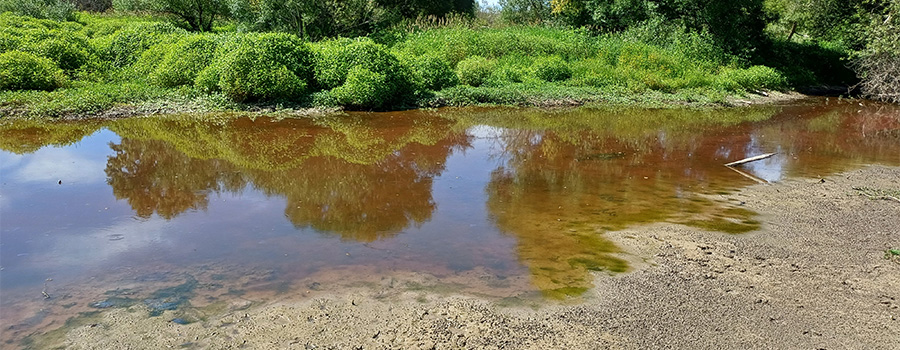
Stagnant streams often look dark and give off an unpleasant odour. This happens because microorganisms in the water consume all available oxygen.
Stagnant streams can arise during periods of low rainfall and can occur when sand builds up at a stream mouth, decaying vegetation blocks water flow, or floodwaters drain slowly.
Coastal
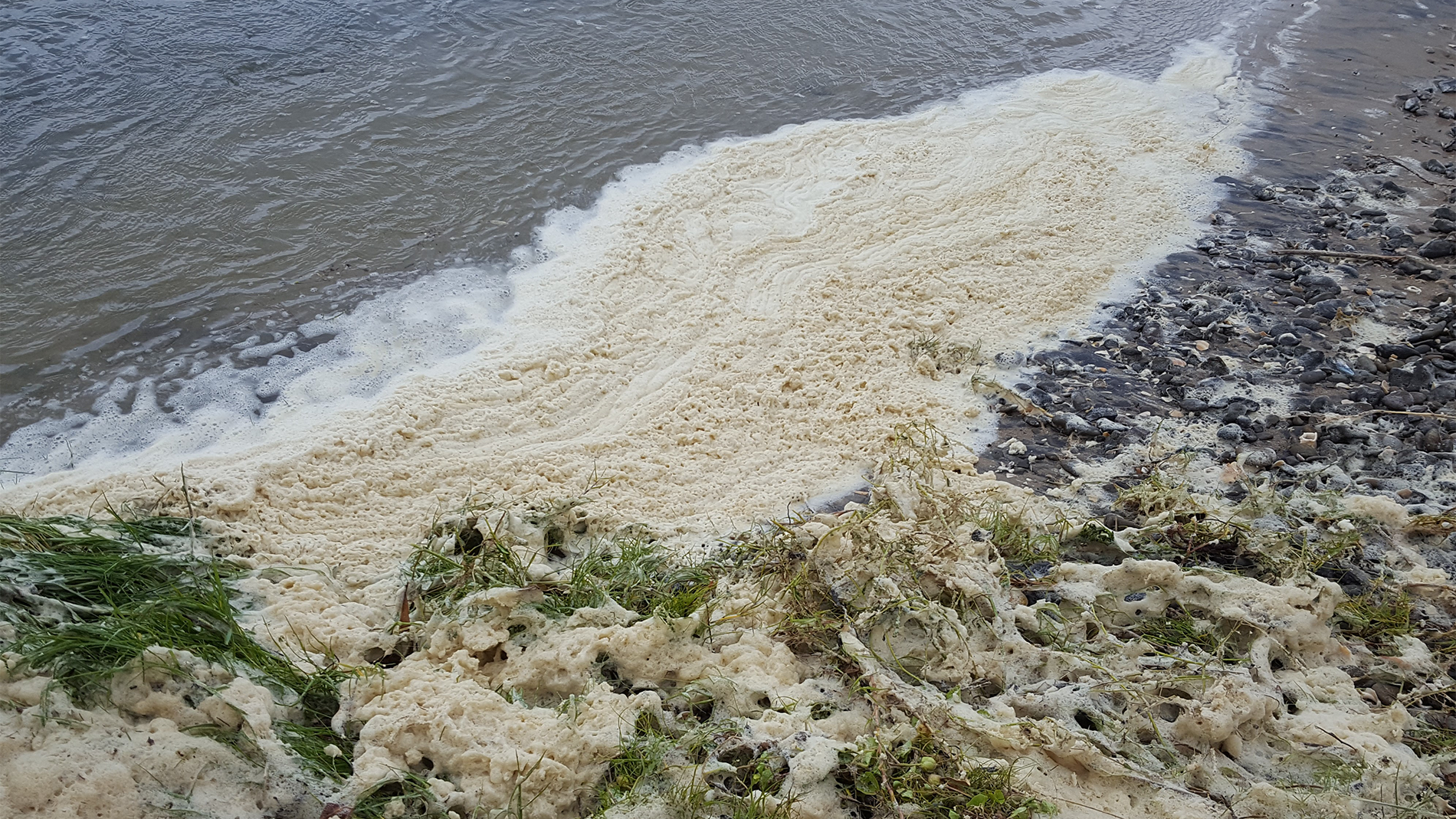
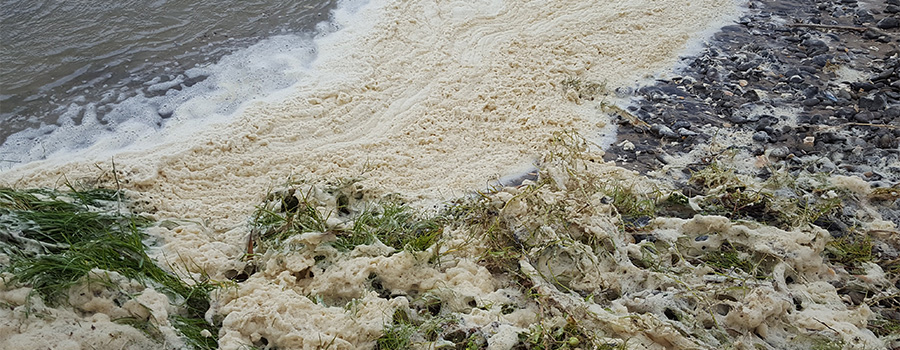
Coastal foams commonly occur on beaches or in estuaries when conditions are right. They form from the agitation of dissolved organic material in seawater and so are more typical after windy periods and when seawater contains higher concentrations of algae, such as in spring or summer, but can occur at any time.
They are a global phenomenon and are usually white, creamy or brown in colour. Coastal foams can persist in the environment for a few days, although some will be very transient and be gone much quicker than this.
In Aotearoa New Zealand they are not typically toxic, although elsewhere in the world, when they form from toxic algae or pollution, and they can pose a health risk.
If you are still concerned and think you have found an environmental incident, please contact us on our 24/7 freephone 0800 800 401 or fill out our incident form.