
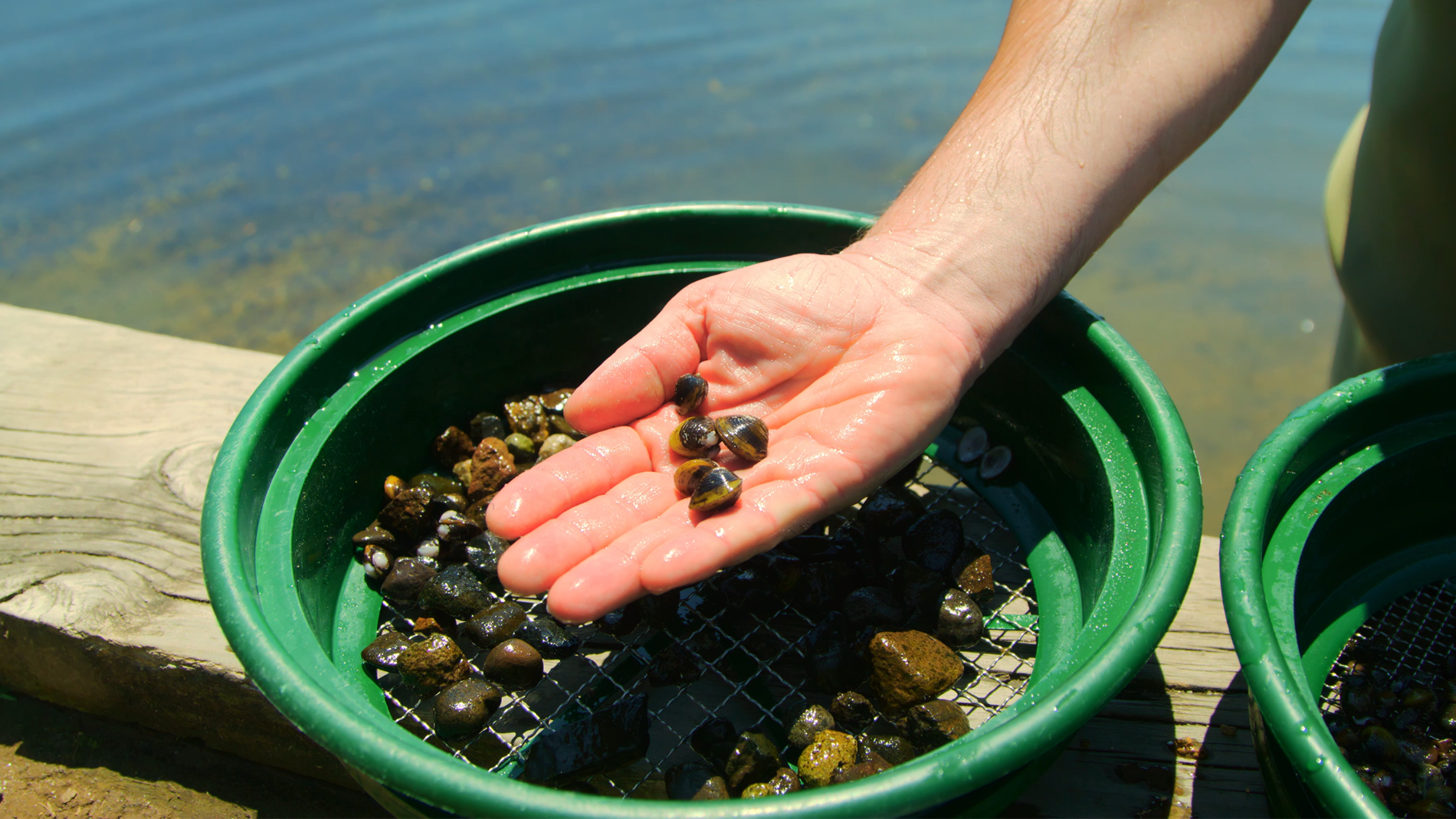
Two species of exotic freshwater clams, Corbicula fluminea and Corbicula australis, have reached the Waikato region. We need everyone’s help to stop them spreading.
Corbicula fluminea (commonly known as 'gold clams' or ’invasive freshwater clams') is native to eastern Asia and is widely established in North and South America and Europe. It was first found in the Bob’s Landing area, Lake Karāpiro, of the Waikato River in May 2023 and is now found throughout the river downstream from Whakamaru Dam to Port Waikato. It was also discovered in a Taranaki lake in November 2025.
Corbicula australis, which is native to Australia where it is common and widely distributed, was found at the Lake Taupō Aqua Park in March 2024 in a small man-made lagoon, which was temporarily closed and has since been treated. There are no other known sites with Corbicula australis in New Zealand.
Biosecurity rules are in place to stop the spread of the clam through a mechanism under the Biosecurity Act called a Controlled Area Notice (CAN).
What do the clams look like?
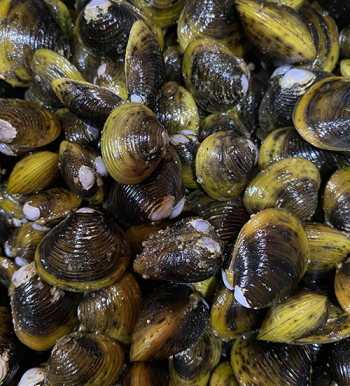
- They are typically 2 to 3 centimetres in length
- They are usually dirty white, yellow or tan
- They have distinctive ribbed texture on the outside of the shell
- Their shell is generally round and symmetrical.
- They are found in highest abundance at 12 to 15 metres depth, but can be seen around the edges of lakes and rivers, often sitting on top of sandy or muddy surfaces, or buried shallowly within the sediment. You may see their breathing tubes (siphons) sticking out of the substrate.
Why are they a pest?
- They are prolific breeders, able to produce 400 juveniles a day and up to 70,000 juveniles a year, allowing them to reach extremely high densities in optimal conditions.
- They can clog water-based infrastructure, such as electricity generation plants, irrigation systems, and water treatment plants.
- They can compete with native species for food and space.
- Overseas, Corbicula fluminea has proved difficult to control and eradication has never been achieved.

Management responsibility
The Ministry for Primary Industries (MPI), with help from Waikato Regional Council, is responsible for the management of Corbicula.
Corbicula fluminea and Corbicula australis have been given the legal status of an Unwanted Organism under the Biosecurity Act 1993.
This means that people must not knowingly move them or water that may contain them. To do so would be an offence under the Act. People can still use the Waikato River for recreation, including boating and fishing, or gathering of kai (food), if they follow the requirements of the controlled area notices, including 'Check Clean Dry' procedures, before moving their equipment or craft.
Movement Control methods
A CAN with specific rules for all wake boats applies to the Waikato River from the Whakamaru Dam to the river mouth at Port Waikato. Wake boats are defined as any craft with an internal tank or bladder that cannot be completely drained.
The CAN came into effect at 11.59pm on 24 November 2023.
Amendments to the CAN came into effect on 1 December 2024 and will be in place until further notice.
Waikato River CAN requirements
- All wake boats that have been in the controlled stretch of the river must not be used in any other waterways, including parts of the river outside the controlled area.
- Recreational river users that have been in the controlled stretch of the river must continue to follow 'Check Clean Dry' requirements for any craft, gear (such as fishing and other equipment used to gather kai) and equipment (including water skis, wakeboards, and inflatable pool toys).
More information
The Ministry for Primary Industries is the primary source of information regarding the management of exotic freshwater clams (Corbicula).