

A diverse economy spanning agriculture, advanced manufacturing, technology, renewable energy, aquaculture, tourism, healthcare and forestry.
The region’s strengths are further supported by a growing Māori economy and the longstanding cultural regional leadership of the Kīngitanga.
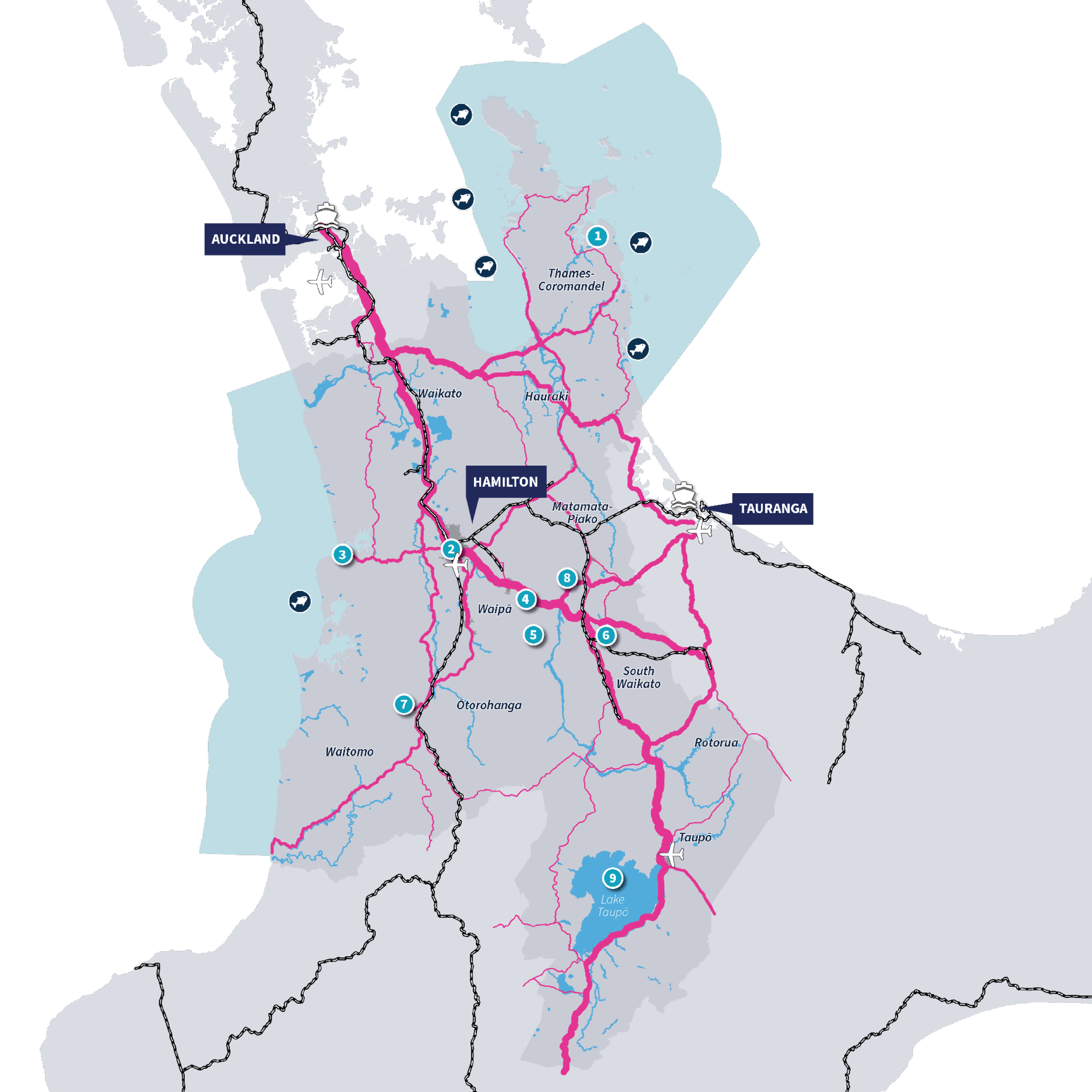
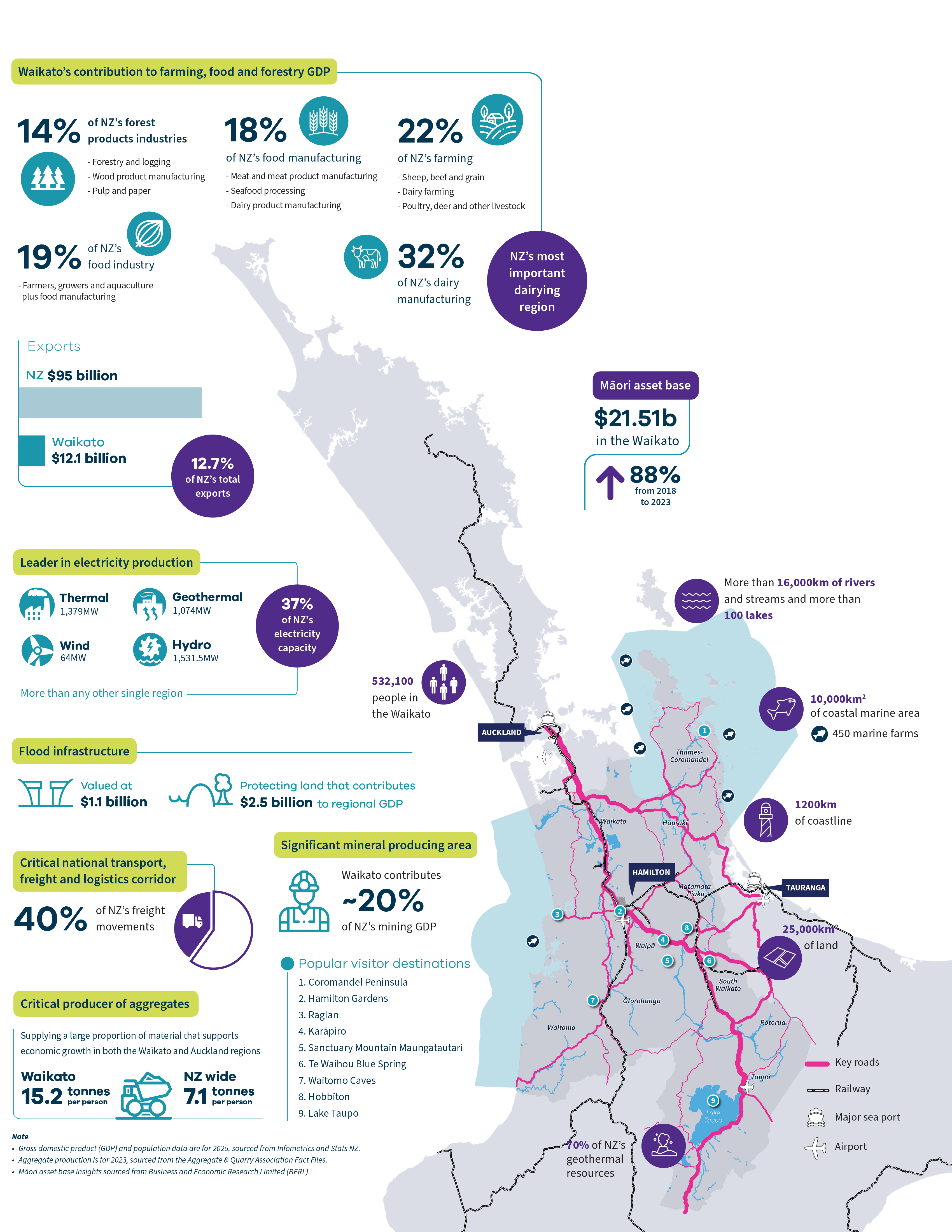
 532,100
people in the Waikato
 >16,000km
of rivers and streams
 10,000km2
of coastal marine area
450
marine farms
 1,200km
of coastline
 25,000km2
of land
>100
lakes
 70%
70%
of NZ’s geothermal resources
Leader in electricity production
Thermal
1,379MW
Wind
64MW
37% of NZ’s electricity capacity
Geothermal
1,074MW
Hydro
1,531.5MW
More than any other single region
Flood infrastructure
Valued at $1.1 billion spread across the Waikato region protecting land that contributes $2.5 billion to regional GDP
Māori asset base
$21.51b in the Waikato
Up 88% from 2018 to 2023
12.7% of NZ’s total exports
NZ - $95 billion
Waikato - $12.1 billion
Waikato’s contribution to farming, food and forestry GDP
14% of NZ’s forest products industries
- Forestry and logging
- Wood product manufacturing
- Pulp and paper
18% of NZ’s food manufacturing
- Meat and meat product manufacturing
- Seafood processing
- Dairy product manufacturing
22% of NZ’s farming
- Sheep, beef and grain
- Dairy farming
- Poultry, deer and other livestock
19% of NZ’s food industry
- Farmers, growers and aquaculture plus food manufacturing
32% of NZ’s dairy manufacturing
Critical national transport, freight and logistics corridor
40% of NZ’s freight movements
Significant mineral producing area
Waikato contributes ~20% of NZ’s mining GD
Critical producer of aggregates
Supplying a large proportion of material that supports economic growth in both the Waikato and Auckland regions
NZ - 7.1 tonnes per person
Waikato - 15.2 tonnes per person
Note
- Gross domestic product (GDP) and population data are for 2025, sourced from Infometrics and Stats NZ.
- Aggregate production is for 2023, sourced from the Aggregate & Quarry Association Fact Files.'
- Māori asset base insights sourced from Business and Economic Research Limited (BERL).