
That focus on getting native plants back into the landscape has been strengthened by support from the Environmental Initiatives Fund, part of Waikato Regional Council’s Natural Heritage Partnership Programme.
Waipā Rere Noa received $30,585.18 from this year’s fund for its Kahikatea Forest Fragments Community Weed Control and Eradication Programme, helping prepare and protect kahikatea forest fragments in the upper Waipā River catchment so native replanting and natural regeneration have the best chance to succeed.
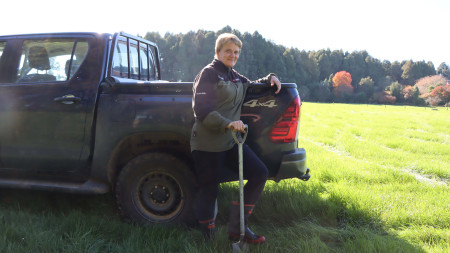
Rosemary is handy with a shovel, with extensive experience in working with native trees.
Waikato Regional Council Senior Biodiversity Officer Kate Pepper is full of praise for the community group. “Council is pleased to support the work of Waipā Rere Noa. Community groups like this are crucial in the effort to increase biodiversity across the region, leading from the front and spreading the understanding of the value of enhancing the environment,” she says.
Rosemary explains that while farmers may be experts in farming, they do not always have the specialist knowledge needed to know which plants belong where, how to prepare a site, or what young trees need to survive. Waipā Rere Noa has filled that gap by sharing practical replanting advice, troubleshooting common issues and helping newcomers learn from others who have already done the work.
Rosemary is particularly passionate about protecting and replanting around kahikatea remnants scattered across the region. These fragments need careful management, from the right fencing and shelter planting through to long-term weed control, and she has been a strong advocate for getting that restoration right.
Placing fences 5 to 7 metres out from the fragment dripline will allow room for a robust shelter planting which will protect and shelter the remnant interior from damaging winds and has the added benefit of encouraging the mature Kahikatea to grow up and not outward into the paddock.
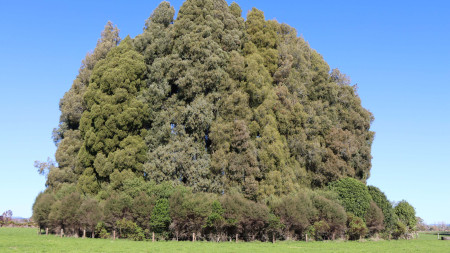
Robust shelter planting around the outside of the kahikatea fragment is critical to protect the inner remnant.
The ongoing mahi of Waipā Rere Noa has helped others understand that successful replanting is not only about putting plants in the ground. It is also about choosing the right species for the right place, giving those plants the conditions they need to thrive, protecting vulnerable ecosystems from stock damage, and tackling invasive pest plants that can overwhelm native regeneration.
“Once you know your species quite well, you can see there’s an order to it,” Rosemary says. Hosting two field days on her farm every year, Rosemary’s expertise and passion is spreading throughout the community, ensuring that the mahi will have longevity.
That practical, long-term approach is one reason Waipā Rere Noa continues to make a difference across the catchment. Through replanting, advice and community leadership, the group is helping turn good intentions into native trees in the ground and lasting results for the Upper Waipā.