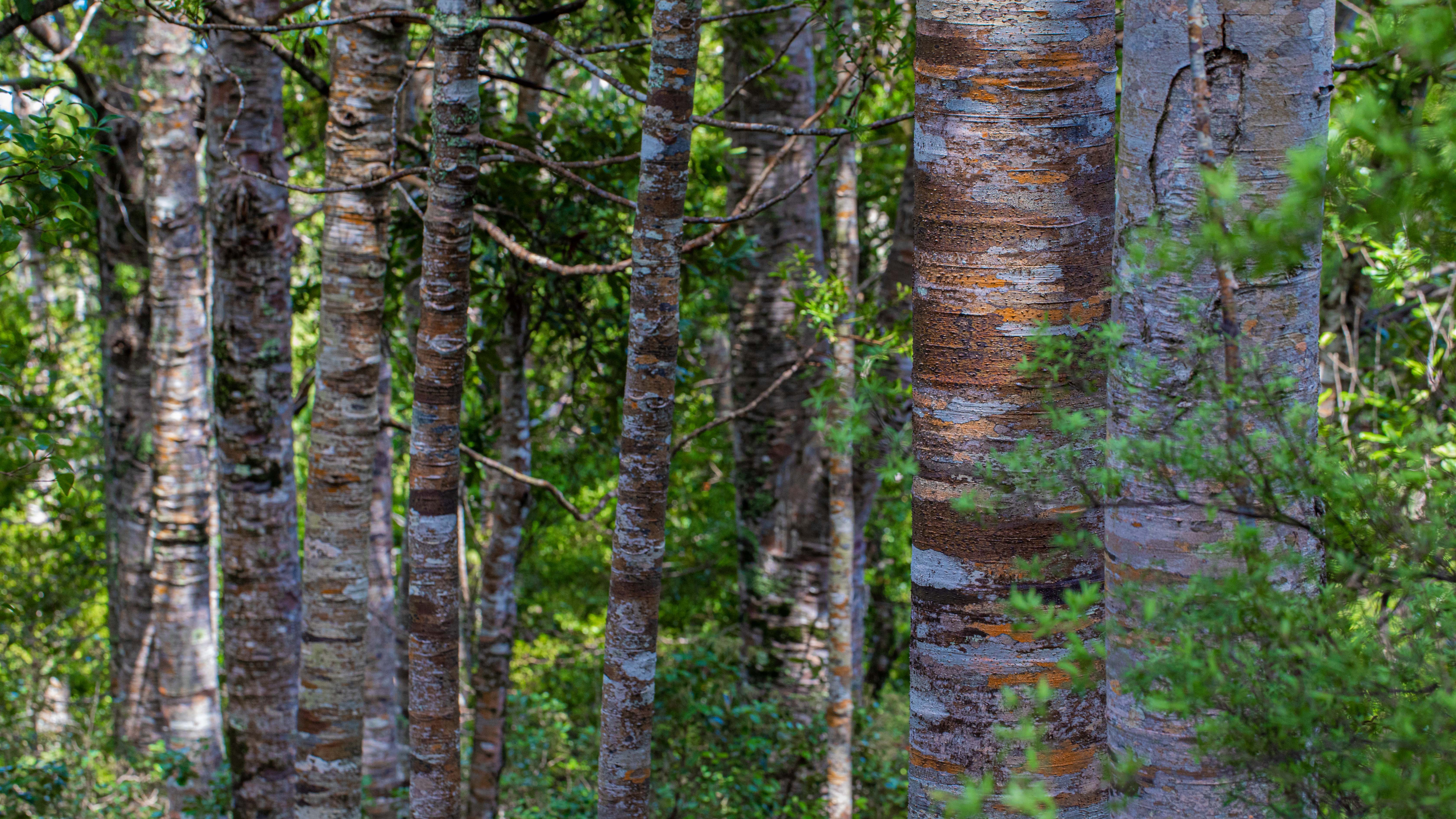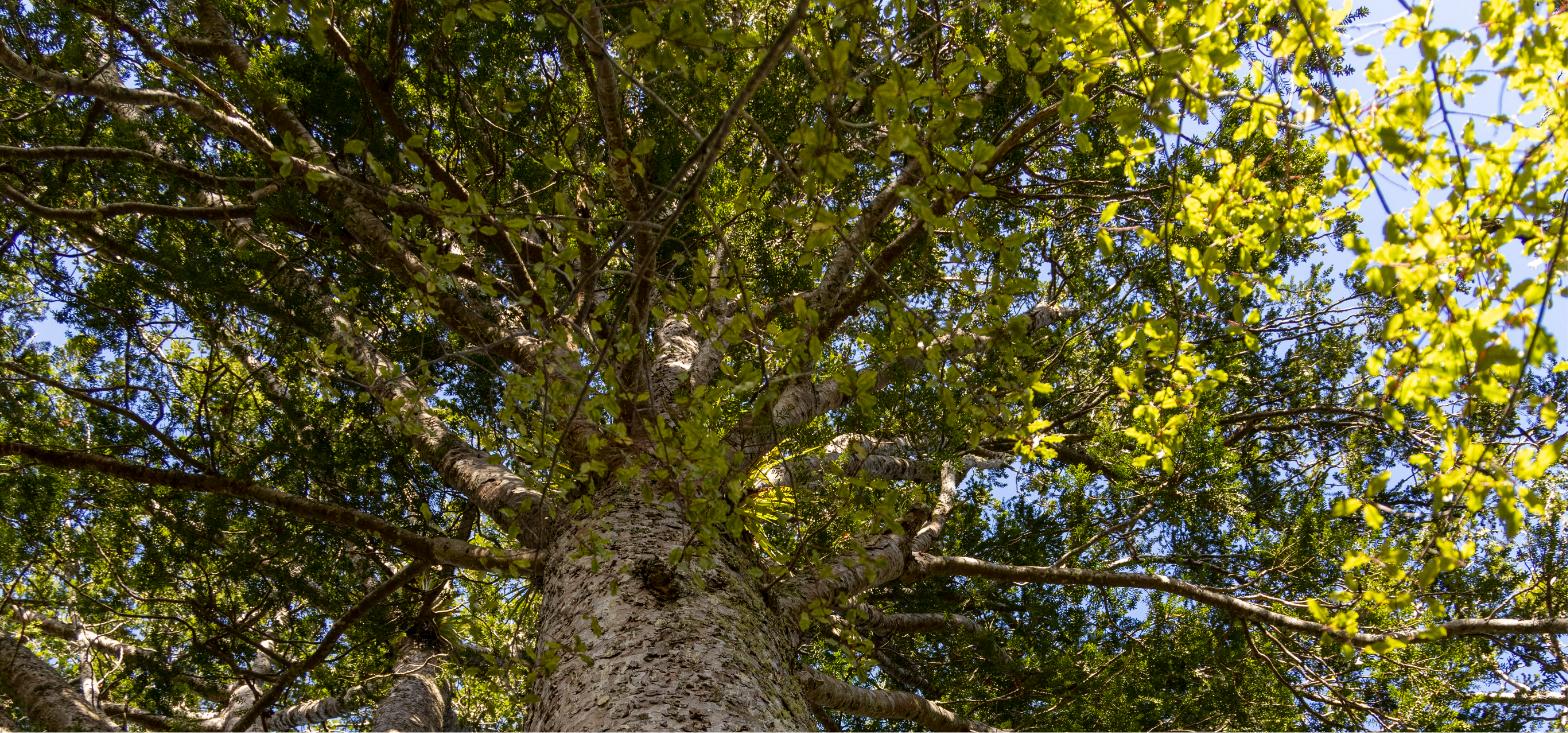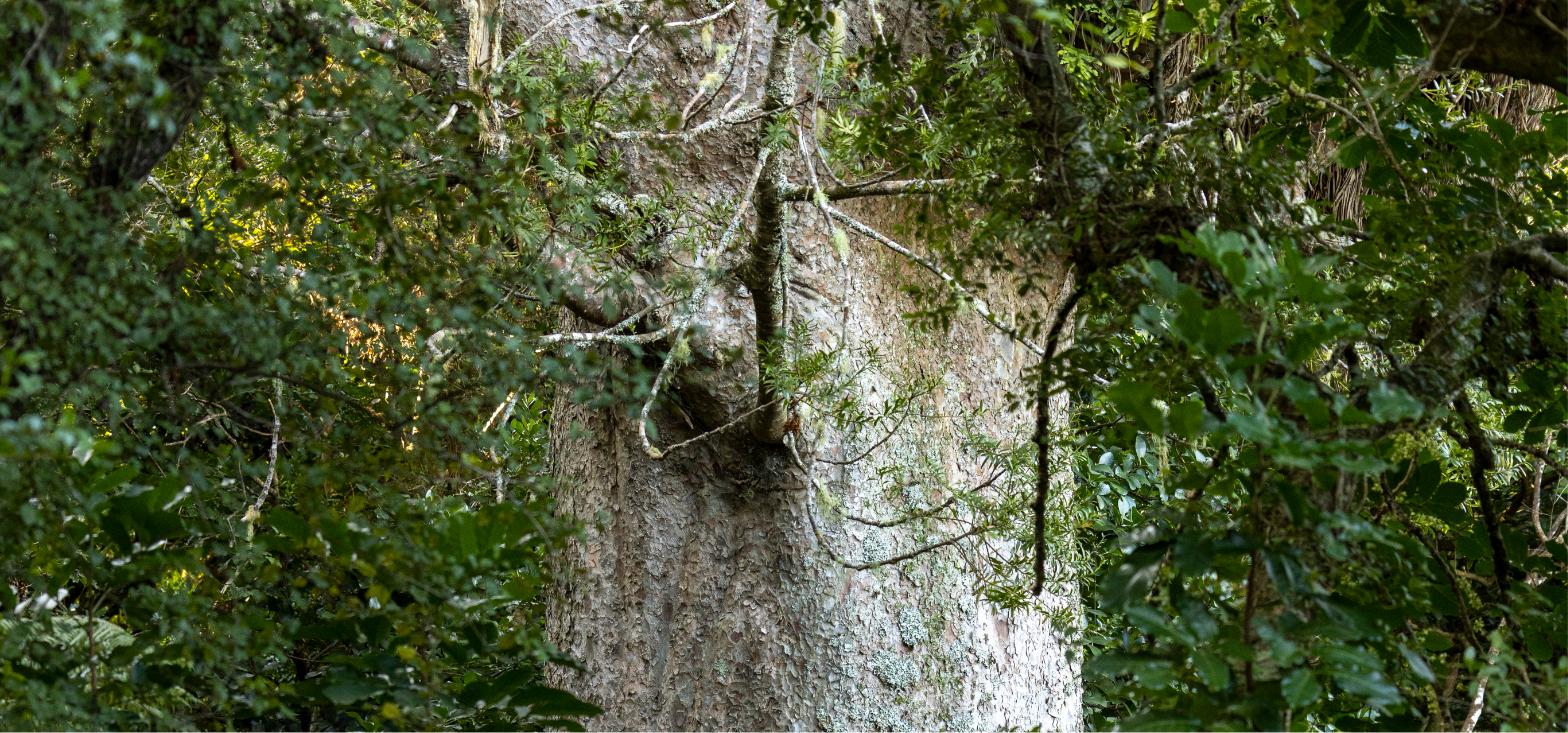
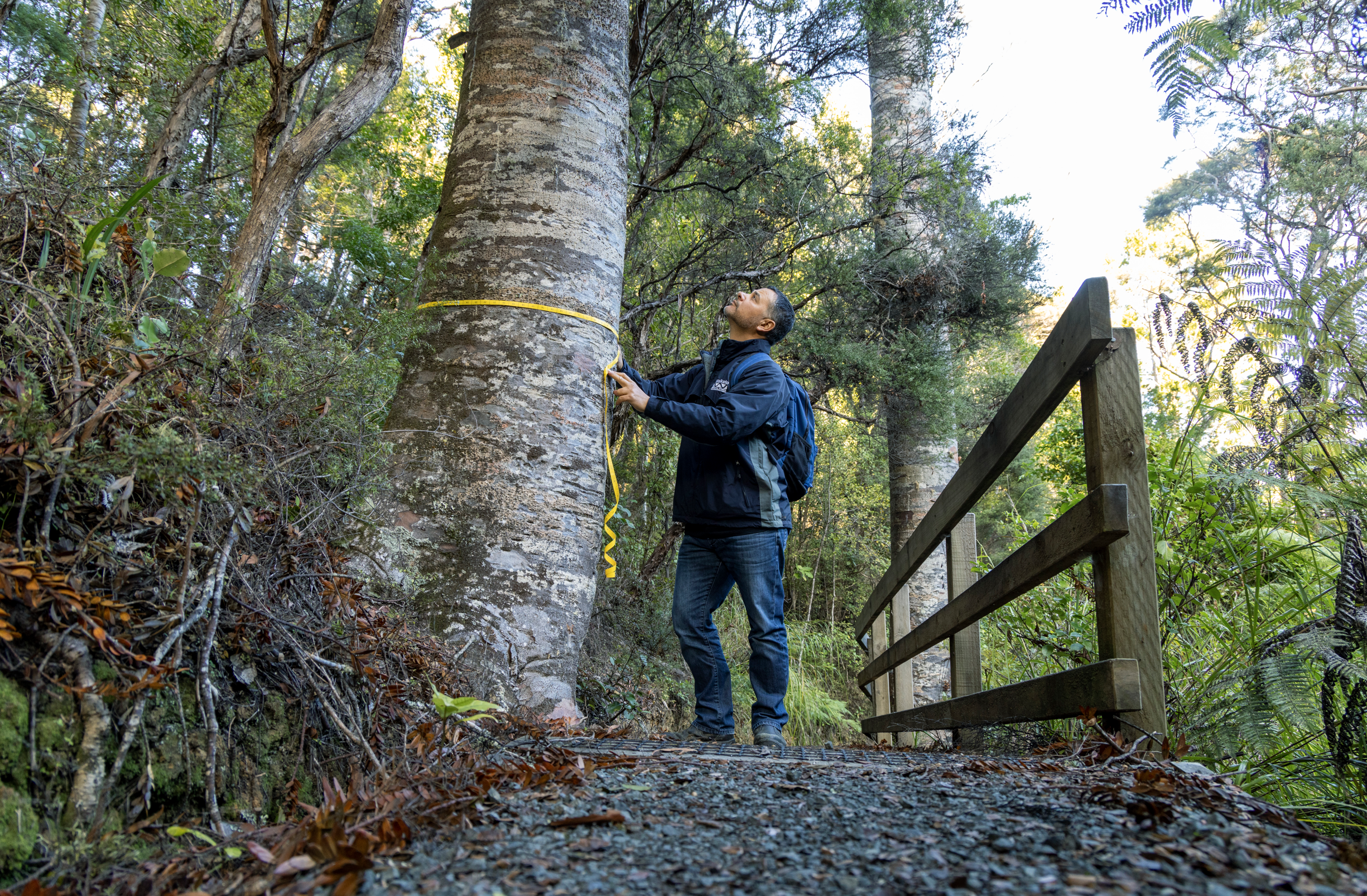
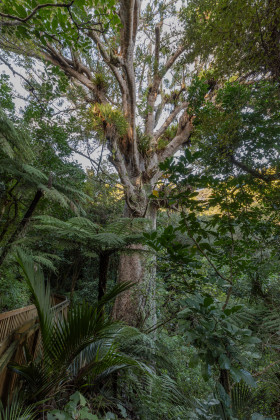
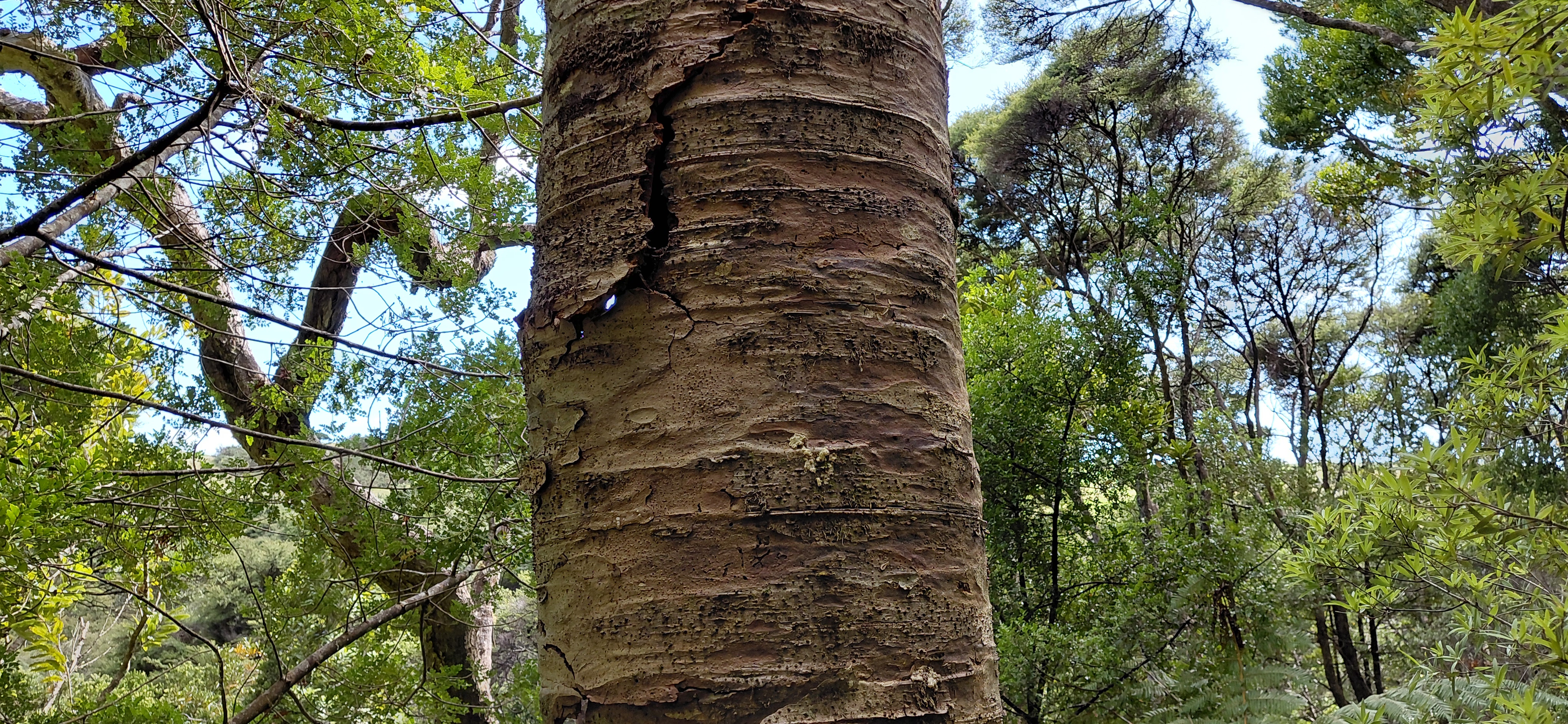
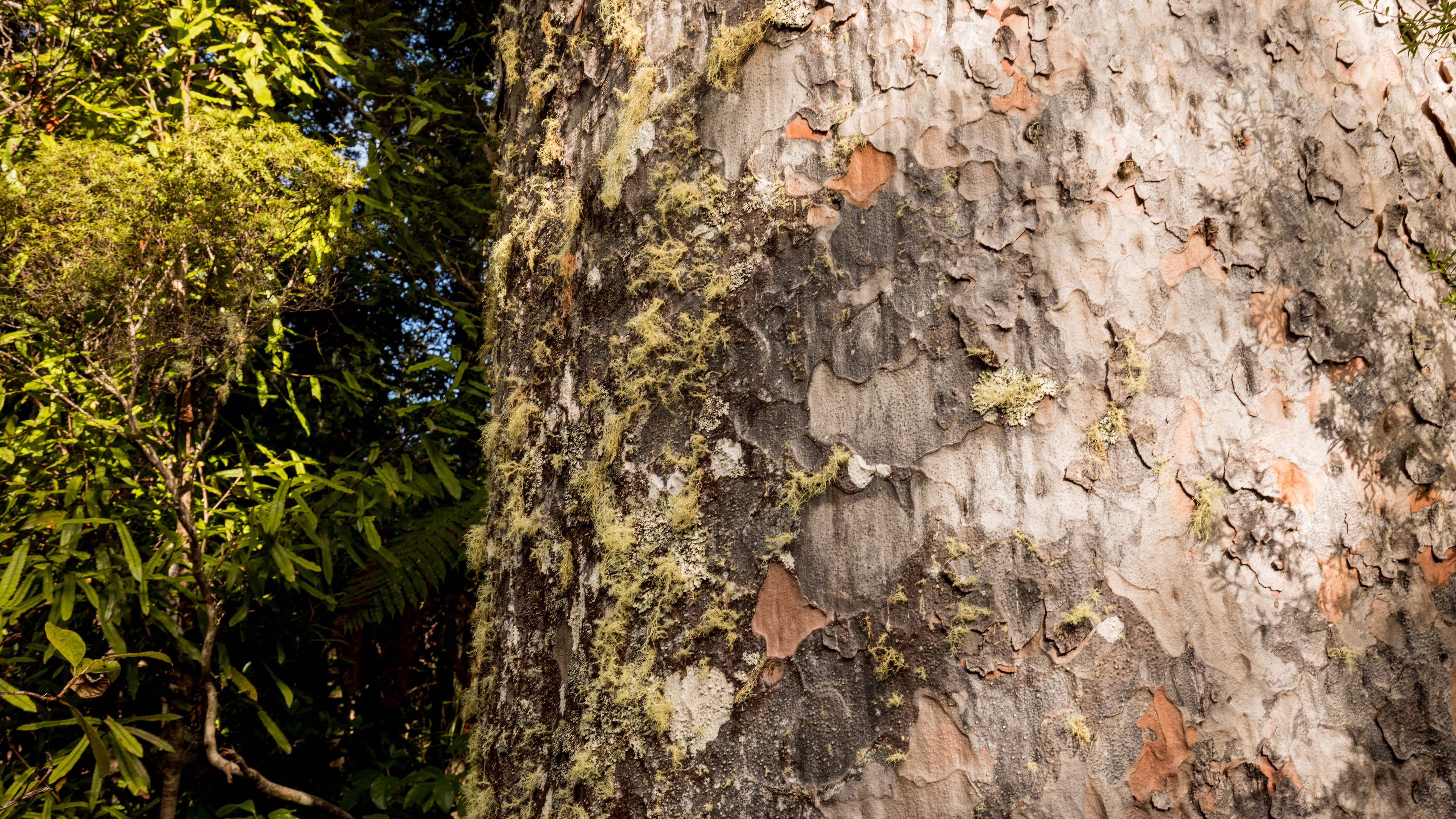
 Kauri are a taonga (treasure) of Aotearoa New Zealand and among the largest conifer species in the world. These remarkable trees can live for more than 1,500 years and grow to immense proportions, towering above the forest canopy.
Kauri play a vital role in shaping the forests they inhabit. Their fallen leaves, bark, and cone scales decompose slowly, creating a unique layer of organic matter around their base. This process changes the chemistry of the soil, influencing which plants can grow nearby and helping to create distinctive forest ecosystems.
Today, more than 94,000 hectares of kauri forest remain across the Waikato and Coromandel regions. These forests provide critical habitat for a wide range of native wildlife, including rare and threatened species such as the Archey's frog, Rawling's strapfern, and fan fern.
The Threat to Kauri
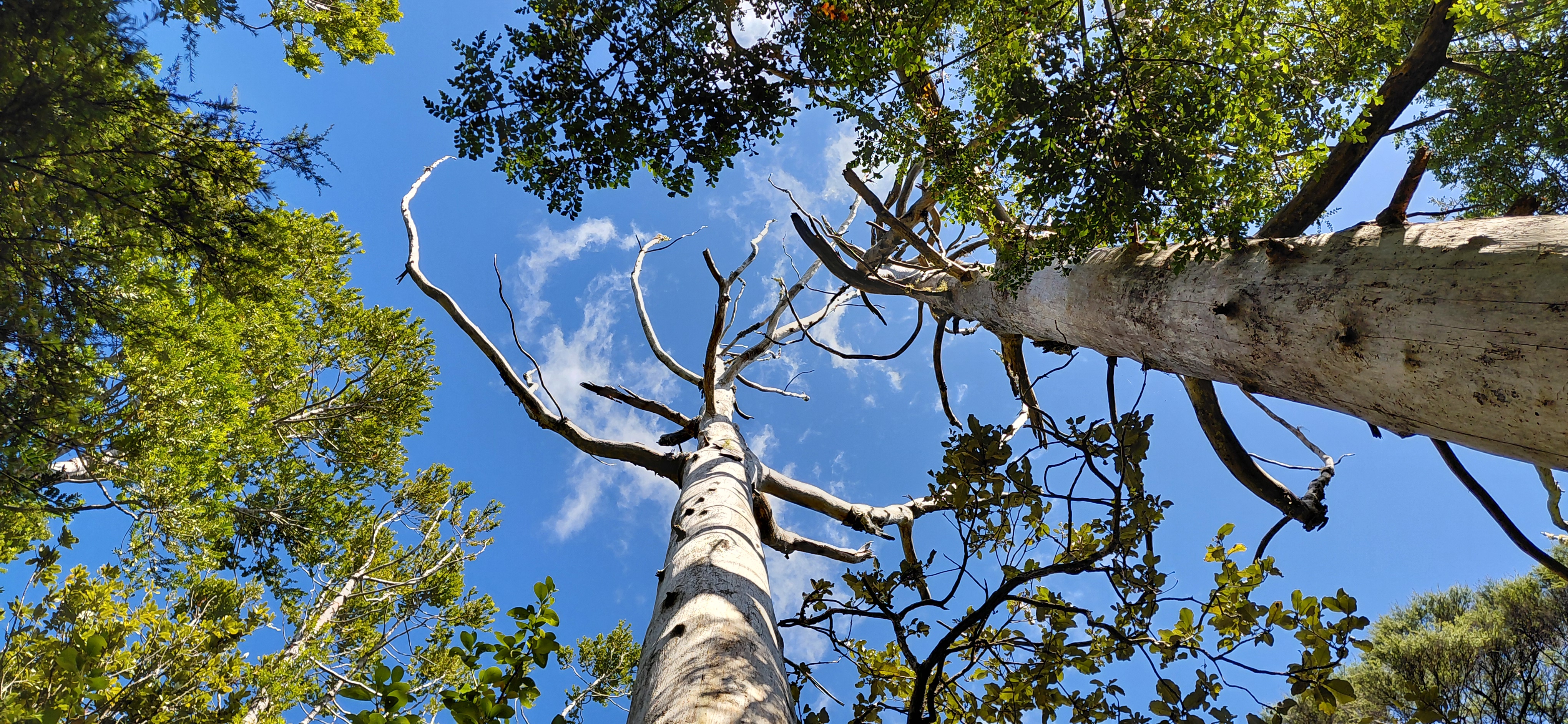
Kauri are threatened by a soil-borne pathogen called Phytophthora agathidicida (PA for short).
The PA pathogen infects kauri trees through their roots and restricts the transportation of water and nutrients between the roots and the leaves, eventually starving kauri. This causes the condition known as kauri disease.
Know the Signs
A kauri tree may be infected for years before obvious symptoms appear.
Look out for:
- Yellowing or discoloured leaves
- A thinning canopy
- Dead or dying branches
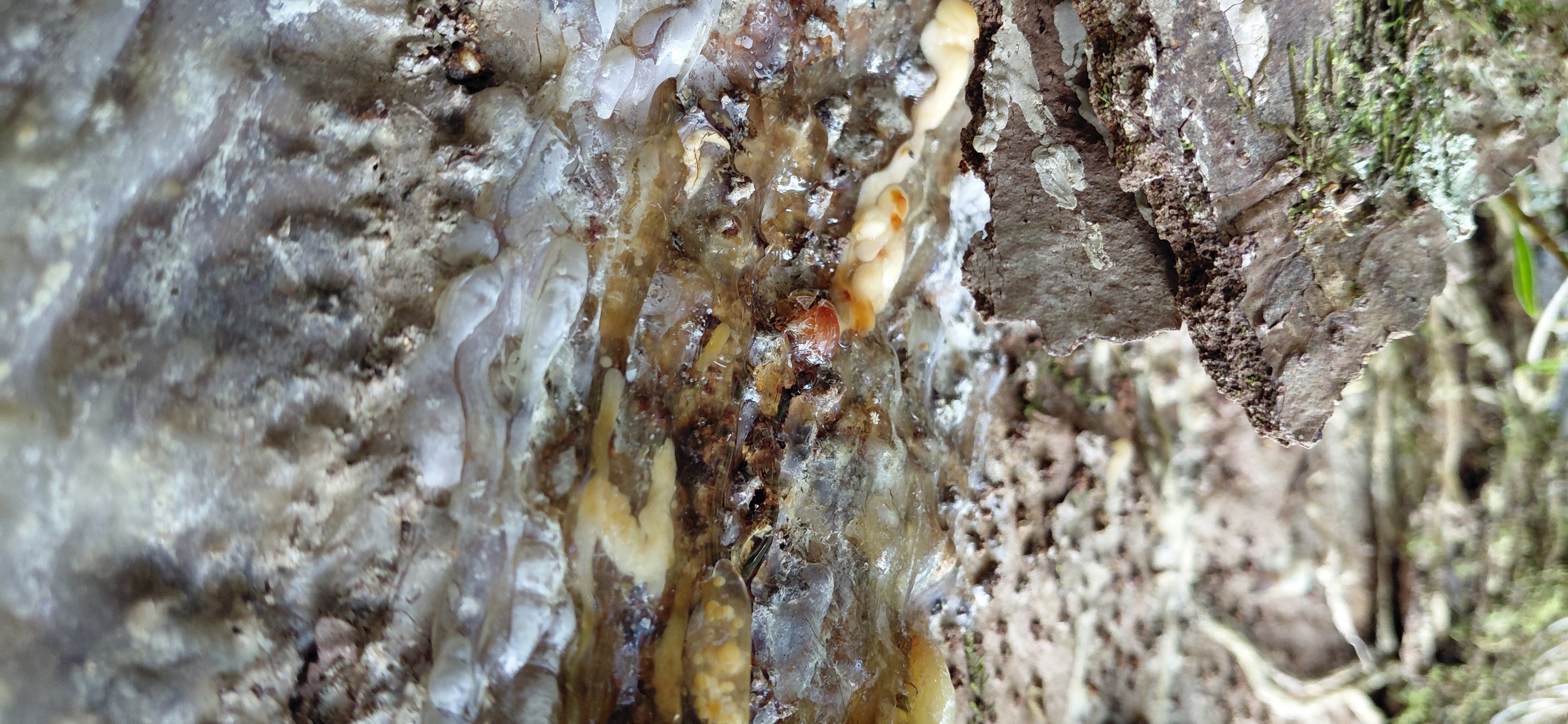
- Bleeding gum around the trunk
Kauri health concerns
If you see a kauri in the Waikato that appears to be sick, please report it to Waikato Regional Council and provide images so the Kauri Protection programme can investigate.
Protecting Kauri Together
Protecting kauri is something we can all help with.
The National PA Pest Management Plan was introduced in 2022 to reduce the spread of PA and protect healthy kauri forests for future generations.
The plan includes rules for people who:
- Have kauri trees on their property
- Visit areas where kauri grow
- Grow or sell kauri trees
- Own livestock that graze near kauri forests
How You Can Help
Kauri infected by PA are not widespread in the Waikato region. The survival of kauri depends on all of us taking action to stop the PA pathogen from spreading. Here are some simple steps you can take.
 Keep people, vehicles, equipment and stock away from the kauri root zone, which is three times the drip line of the tree and a susceptible area for PA.
 Scrub all the dirt from your gear, before entering and exiting a kauri forest.
 Check that all dirt has indeed been removed after you have scrubbed your gear.
 Spray your gear with disinfectant after scrubbing and checking for dirt.
 Stay on the track to avoid kauri root zones.