
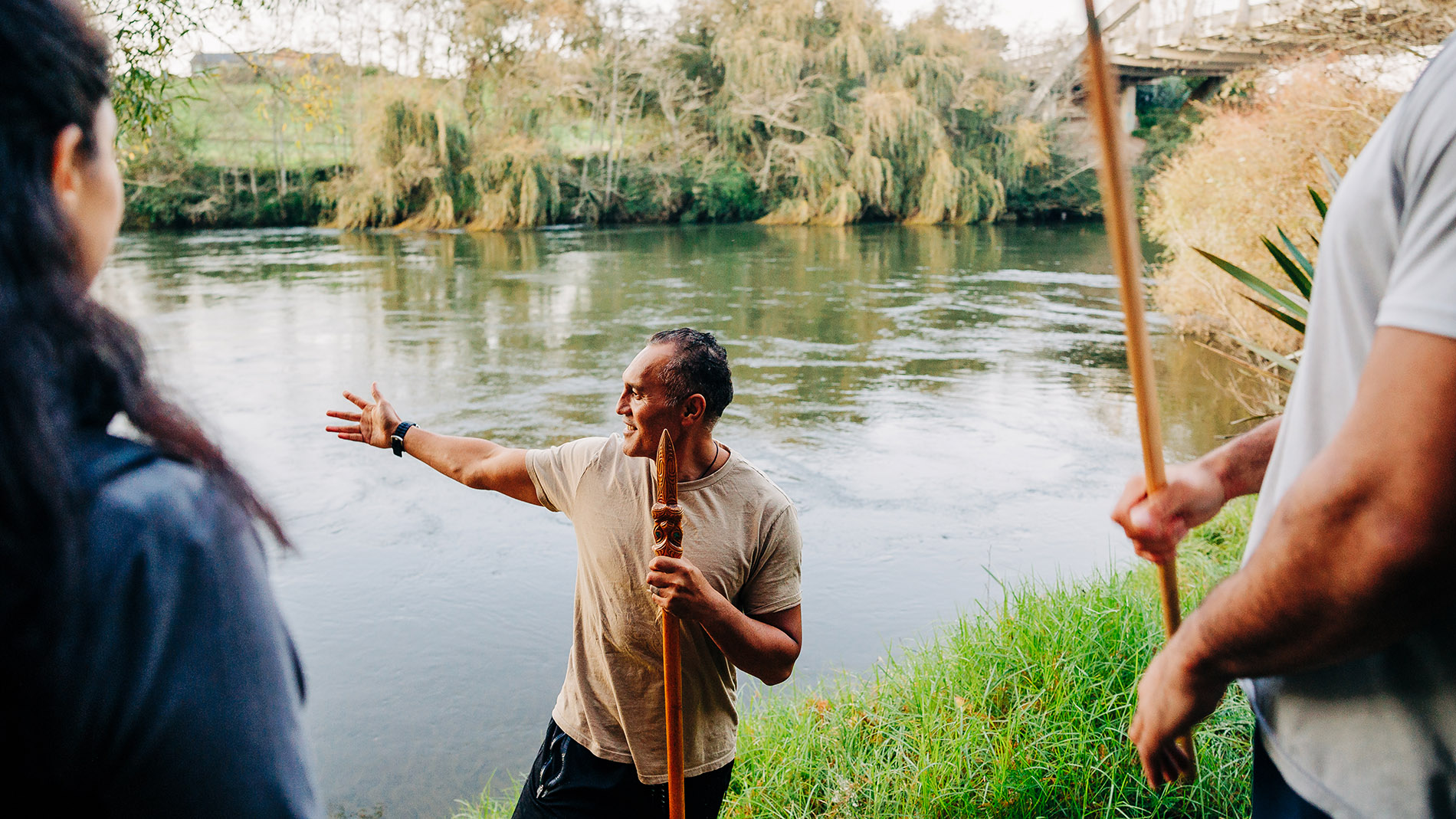
Our work spans a wide range of planning and policy matters, many of which rely on strong, respectful and meaningful engagement with iwi Māori.
Across the organisation, we work closely with iwi Māori on a wide range of projects, engaging regularly at governance, operational and community levels. These ongoing conversations help ensure iwi perspectives, aspirations and mātauranga are embedded in our work.
Council continues to invest in strengthening these relationships, acknowledging that working collaboratively with iwi enriches our understanding, improves decision making and supports shared stewardship of the places we all call home.
Iwi in our region
The principal iwi groups in the region are Waikato, Maniapoto, Raukawa, Hauraki, Te Arawa and Tūwharetoa. Within these collective iwi groups there are numerous iwi and hapū, often represented in an official capacity by an iwi authority, iwi trust board or rūnanga.
Iwi across the region have expressed a strong desire to work in various forms of partnership with Waikato Regional Council. Some partnerships are established through Treaty settlements, while others are developed through memorandum of understanding and a range of other formal and informal relationships.
Important concepts - He pou tikanga whakaaro
Māori have comprehensive customs to manage and protect their resources, for example whakapapa, kaitiakitanga, rāhui and the significance of mauri.
All things in the Māori world can be traced and explained through whakapapa. The whakapapa of the natural world – animals, plants, mountains, rivers, lakes, air, coasts - is linked to that of Māori. Māori have an ancestral obligation to ensure that these taonga are protected and managed when passed on to the next generation.
Mauri is the life force that generates, regenerates, and binds the physical and spiritual elements of resources together. For Māori eye kai, maintaining and enhancing the mauri of the taonga is the focus of environmental management.
Kaitiakitanga implies an obligation and responsibility for tangata whenua to be custodians, protectors and guardians of tribal interests, its taonga and the resources it owns.
When a rāhui is placed upon a river, lake, forest or harbour, this bans people from using some resources. For example, a rāhui might ban people from gathering shellfish at a beach. Many Māori tribes use the practice of rāhui to conserve or replenish a resource.
Heritage - Ngā taonga tuku iho
Waahi tapu and waahi tupuna are spiritually and culturally important places for Māori. Most waahi tapu sites are linked to past battles or historic events. For Māori, these places help to give meaning to their lives and tribal society, providing ‘windows to the past’. Waahi tapu sites are often located on:
- rivers
- lakes
- harbours, estuaries and coastlines.
This means they are more likely to be disturbed by developments such as:
- flood protection works
- pastoral farming activities
- residential subdivision
- government developments
- private industrial developments
- other construction.
Māori believe local tangata whenua should have unrestricted access to waahi tapu sites, but that public access should be restricted.
What Waikato Regional Council is doing
Waikato Regional Council is working with tangata whenua, supporting resource management workshops, contracts with iwi, joint research projects, and Māori-based care groups.
It’s important that we consult tangata whenua during planning and consent processes so that existing and newly discovered waahi tapu sites are identified and protected from desecration.
Māori participate in the management of the region’s resources by developing resource management plans and having tribal representatives in resource management activities. Māori are contributing to council policies and consultation on resource consent applications.